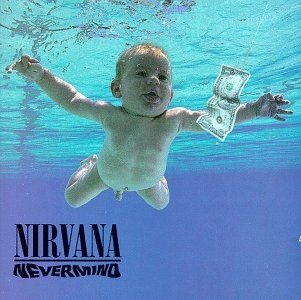
Every 10 minutes or so, the press and music television stations will do some listing of "the Most Important Albums of All Time." Nirvana's
Nevermind is usually in the top five, after
Sgt. Pepper and
Exile on Main Street. You know, the usual suspects.
In at least one regard,
Nevermind may be the most important record of all time. Not as much for the actual music, though it was phenomenal, but for the impact it had. When the Beatles hit it big, Frankie Valli and Elvis Presley still had careers - they just weren't as popular as they previously were. When
Nevermind hit, the hair farmers evaporated completely. It was like they never existed. For all anyone knows the guys in Cinderella could be working at a gas station now. With the exception of Bon Jovi, an entire genre of music ceased to exist because of one record. And Bon Jovi was never really a hair band as much as they were Bruce Springsteen with bigger amps and a limited vocabulary.
Some people point out that Nirvana was the logical extension of the Sex Pistols. As influential as the Pistols were, they were never that popular. It took 15 years for
Never Mind the Bollocks, Here's the Sex Pistols to sell a million copies.
Nevermind sold that many in January of 1992 alone. Nobody, not the critics, not the record company, and not Nirvana themselves expected what would happen. Nirvana's label, DGC, originally printed 50,000 copies of
Nevermind and thought they would be lucky to sell them all. The album only cost $160,000 to make in an era where the average is about five times that. Kurt Cobain himself said that he expected
Nevermind "to do as well as the average Sonic Youth album." The success and impact of that record was as unexpected as it was unprecedented.
And that may have contributed to the death of Kurt Cobain. It's not the only reason, or probably even the primary one. After all, no one starts a band to be anonymous. But the kind of music Cobain made wasn't designed for mass appeal. It wasn't built to be successful, certainly not as successful as it became. Cobain loathed rock stars and never seemed to be sure what to do when he became one. Most celebrities strive for their status, Kurt Cobain tripped over it, which I imagine only added to the pressure of it. I don't think fame itself killed Kurt Cobain, but I suspect that it was a factor.
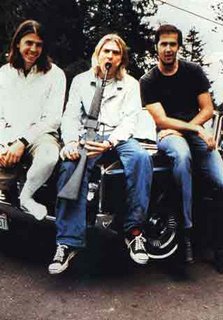
Kurt was, to put it mildly, a giant mess. There was a long string of alcoholics and suicides in his family, which put him at a statistically higher risk to kill himself. He suffered from a chronic, undiagnosed stomach pain for over half of his life. His struggles with heroin addiction are well documented. Then there was his mental state. Starting in high school, Cobain talked about suicide regularly. Three of
Nevermind's four singles (
Smells Like Teen Spirit,
Come As You Are and
In Bloom) feature guns prominently in the lyrics.
In Utero was to have been called
I Hate Myself and I Want to Die and was only changed for fear of lawsuits against the band. Suicide is a theme throughout
in Utero. The posthumously released
MTV Unplugged in New York mentions death or dying in no fewer than six songs.
Nobody should've been particularly shocked when, 10 years ago today, Kurt Cobain packed his life into a junkie's cigar box, went to the greenhouse over his garage, wrote a farewell note, and killed himself with a shotgun.
Had he not died in April of 1994, he likely would've died sooner or later. It's hard to imagine the Kurt Cobain who wrote
Nevermind and
In Utero alive today under any circumstances. Even if he had never become famous, or if Nirvana had become what Cobain wanted it to be - a moderately successful alternative rock band, unknown outside of college campuses - chances are Kurt Cobain still would've committed suicide. The depression would've still been there and it's important to remember that he had begun using heroin over a year before he became famous. Without fame to aggravate his mental condition, he might have lived a few extra years, but probably not much longer than that. Maybe he would've made some obscure records, killed himself and been discovered later. A rock n' roll
John Kennedy Toole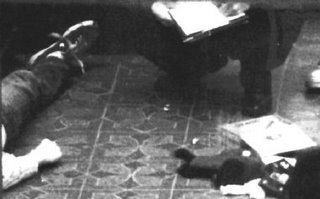
As much of a splash that was made of Cobain's legacy in the aftermath of his death, it took much longer to fully realize how important his music was. Nothing has had that impact since and it seems unlikely that anything ever will. The recording industry that took a chance on three guys from Washington state in 1990 no longer exists. As recently as ten years ago, labels would give an artist a few albums to develop. That's no longer true. If you don't move 2 million units your first time out, you're finished. In 1990, there were nearly a dozen major labels. Now there are three or four. The record companies are far more risk-averse now than they were a decade ago. Ten years ago, a label like Geffen could take a chance on a Nirvana or a Beck debut CD that could potenially lose a lot of money because they knew they could make that money back with the next Guns N' Roses or Aerosmith album. Now Geffen is a small subdivision of Vivendi, a company whose primary business is bottled water or something.
The way the music business is structured today, a Johnny Cash, a Bob Dylan, a Jimi Hendrix, a U2 or a Nirvana would never get signed in the first place, because none of them sound enough like Celine Dion or (God help us all) Limp Bizcut. Nirvana may very well have been the Last, Great Experiment of the Rock Age. One could look to the indie labels for the next Nirvana, but as soon as a small label shows some promise, it gets bought out by a major and signs acts suitable for the next Britney Spears tour. And that's hard to get excited about.
In April 1994, I became "that guy." I just didn't know it yet.